AI4Science
Does Caregiving Cause Distress?
Co-author, University of Michigan, STATS 571: Causal Inference
Older adults often take on unpaid care for a spouse, relative or friend, and caregivers report more emotional distress. But the people who become caregivers differ from those who don’t, so is the caregiving itself to blame? In a team project with Devanshi Shah and Jiadong Zhu, we used the Wisconsin Longitudinal Study to estimate the effect of current caregiving on recent emotional distress among caregivers (the ATT).
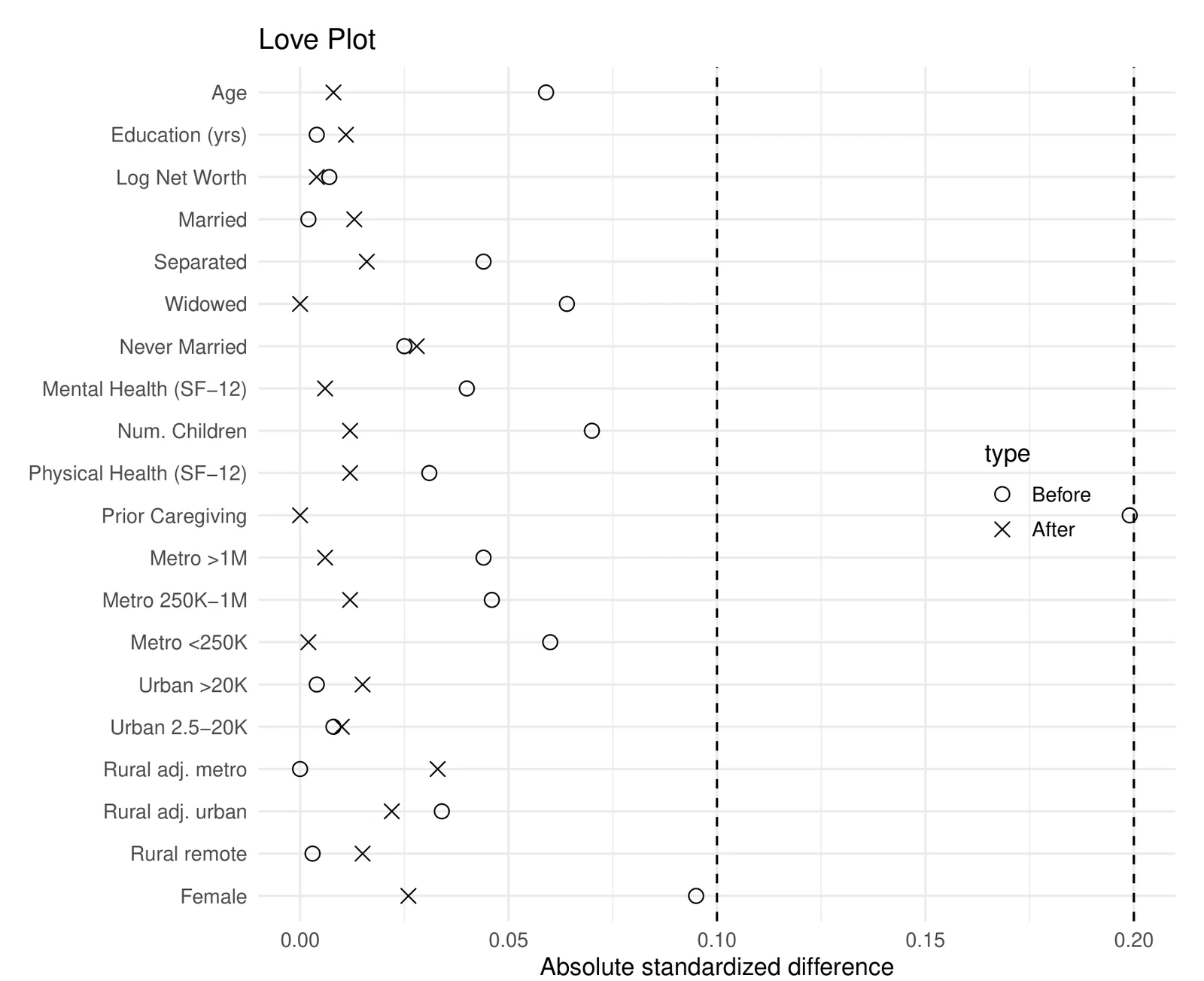
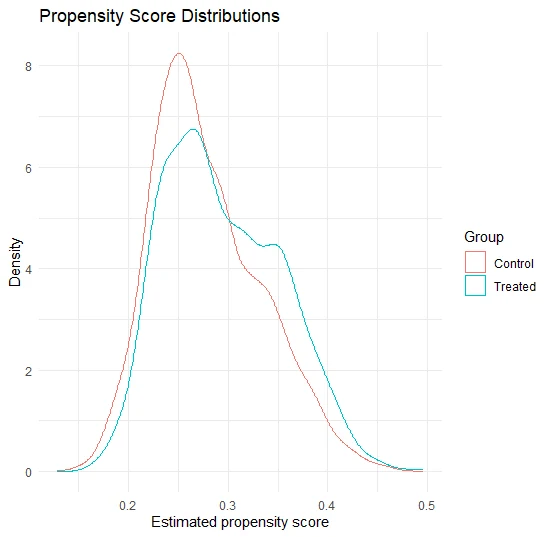
Design. The study follows Wisconsin’s high-school class of 1957 into their early 70s. We took treatment and outcome from Round 6 (2010–2012) and covariates mostly from Round 5 (2003–2006): age, education, wealth, marital status, children, physical and mental health, rural–urban residence and prior caregiving. Matching 1,872 caregivers to comparable non-caregivers gave 1,870 pairs, with every standardized difference below 0.033 (prior caregiving went from 0.201 to 0).
Result. Caregiving raised the probability of feeling fretful, angry, irritable, anxious or depressed in the past four weeks by 4.6 percentage points (McNemar p = 0.004, 95% CI 1.5–7.7).
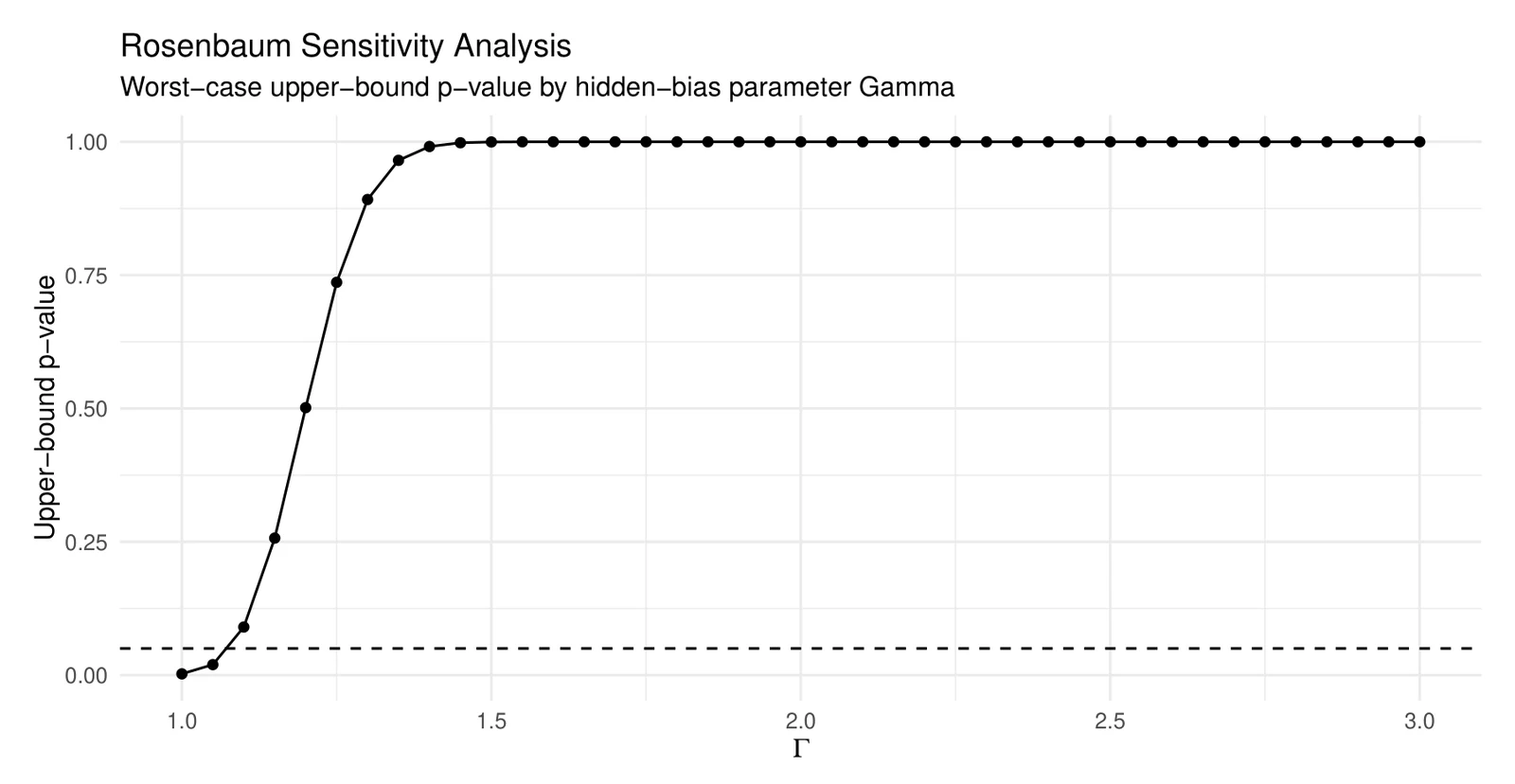
How much to believe it. A Rosenbaum sensitivity analysis shows the effect stays significant only up to Γ = 1.075 and is gone by Γ = 1.1: an unmeasured confounder that shifts the odds of becoming a caregiver by about 10% would be enough to erase it. Together with treatment and outcome being measured in the same wave, the honest reading is a precise but fragile estimate — and a case for panel designs that follow people into caregiving.
What it involved
- Work
- Study designData cleaningMatchingEffect estimationSensitivity analysis
- Knowledge and tools
- Potential outcomesSUTVA and ignorabilityPropensity scoresPair matchingMcNemar testRosenbaum boundsR
Figures