projects / moiredeform
MoiréDeform
Towards Fine-Grained Deformation Sensing through Everyday Moiré
ACM MobiCom 2026 · Demo · Austin, TX
Every time we sit, lean, or breathe, we gently deform the surfaces that hold us. Those tiny deformations carry signals about posture and even breathing — but they are hard to see without instrumenting the surface or the person.
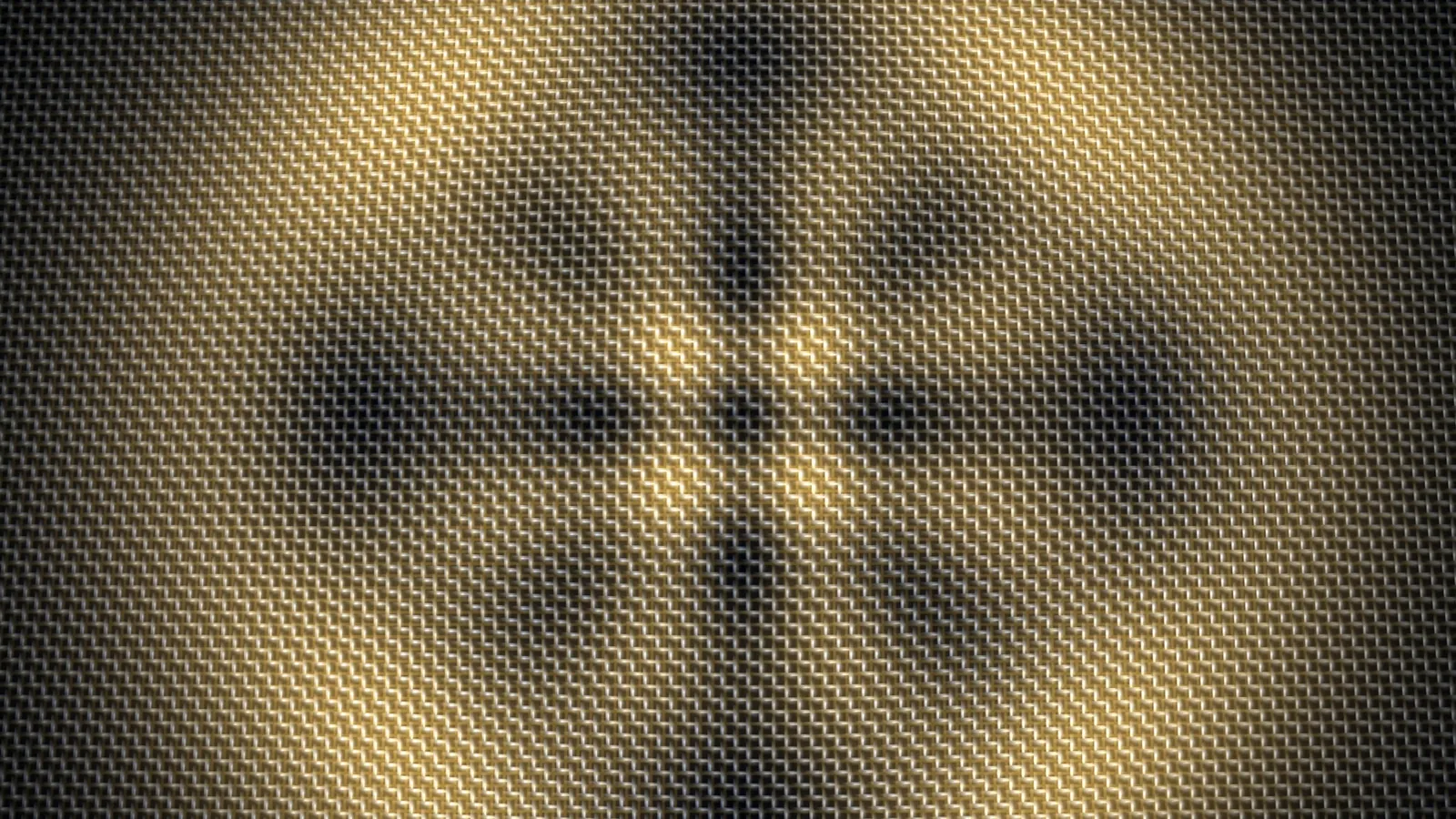
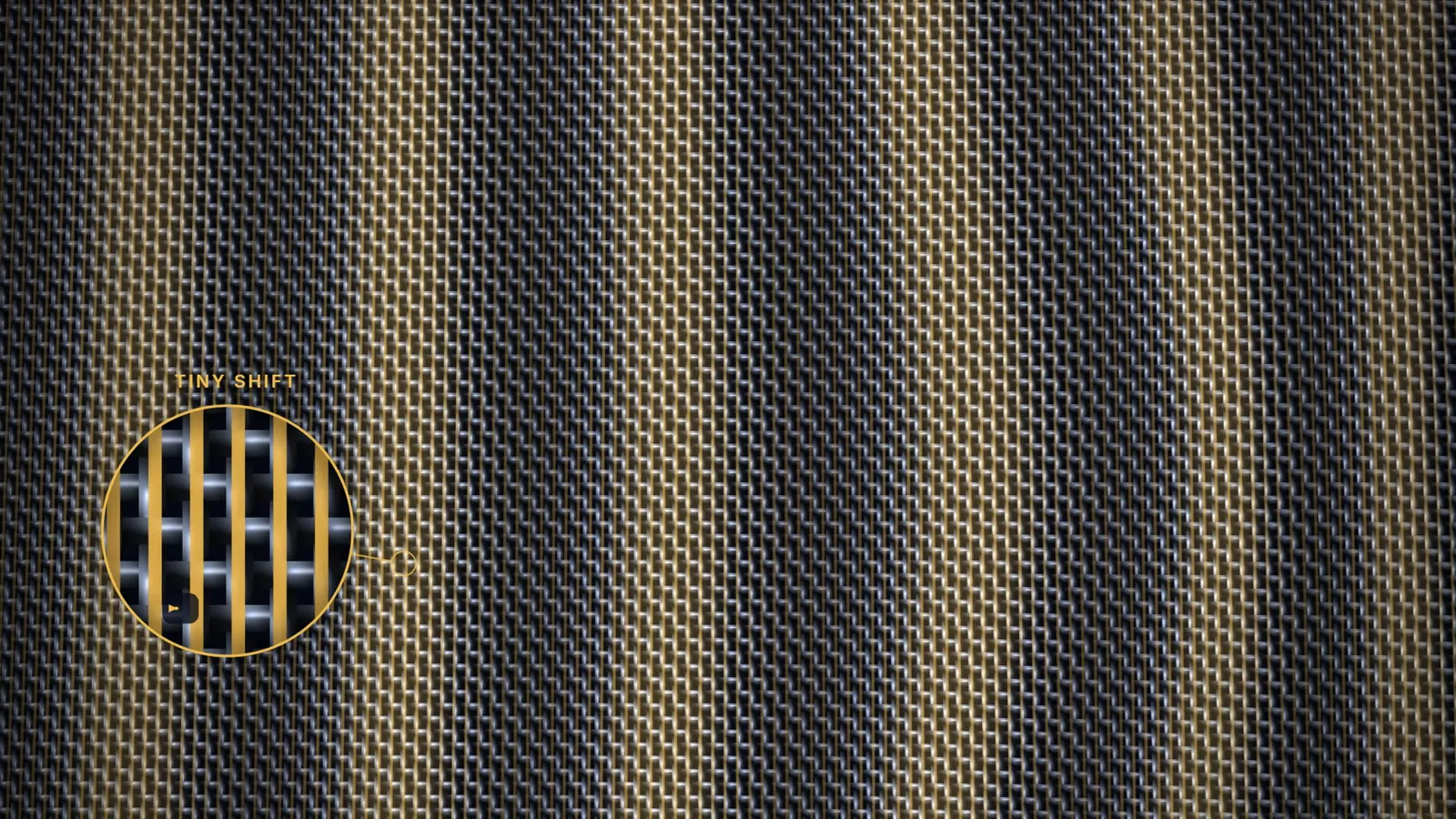
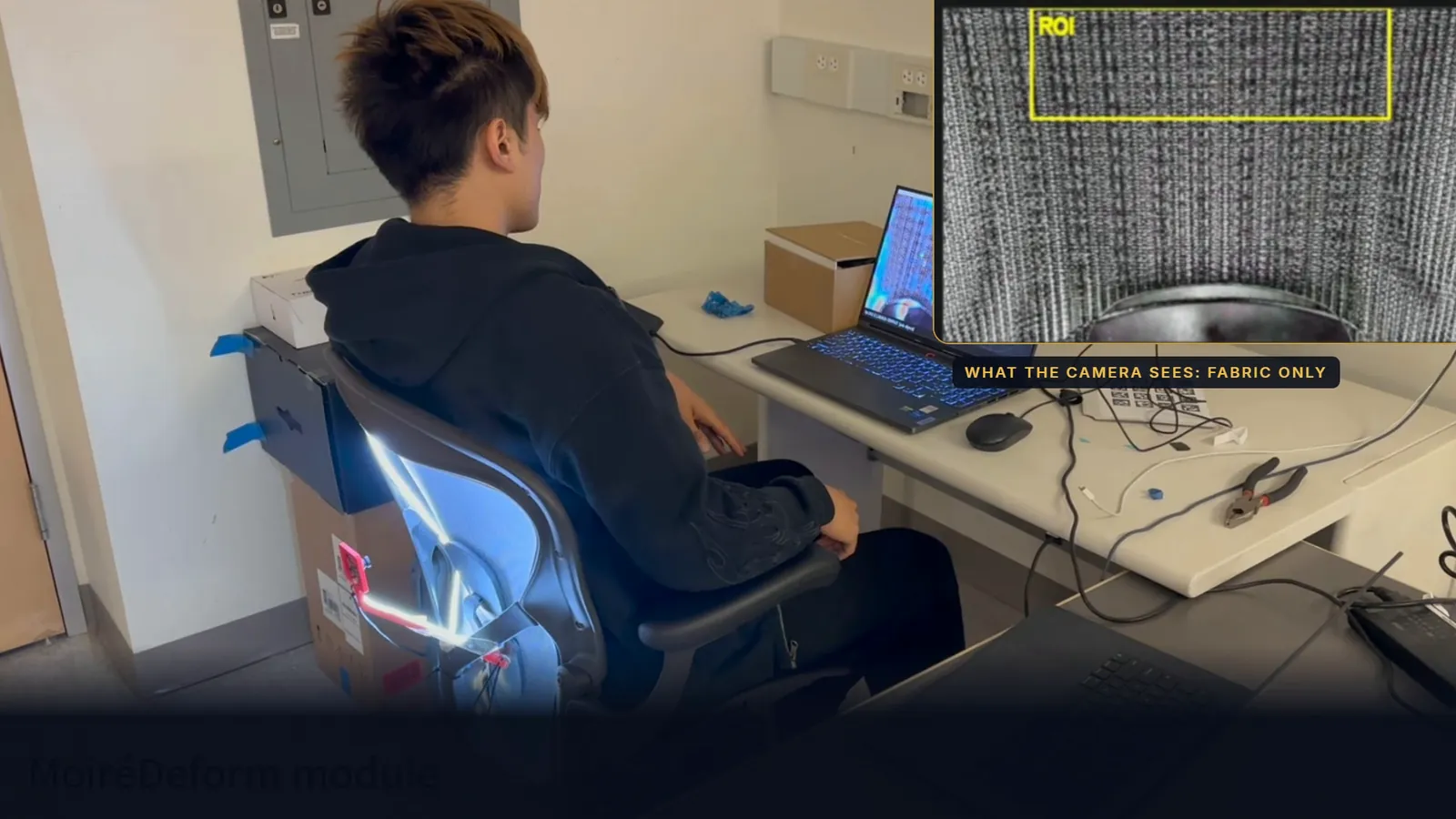
Moiré patterns make them visible. When two fine, repeating patterns overlap, a tiny shift between them turns into a large, sweeping fringe. Woven surfaces like the mesh of an office chair already carry that repeating pattern. MoiréDeform turns the mesh into a sensor: a low-cost camera behind the chair records one reference frame of the empty backrest, and each live frame is compared against it, so the two act as virtual layers and deformation appears as a moiré pattern. No markers, no added gratings, no changes to the chair — and the person sitting in it is never in frame.
what it does
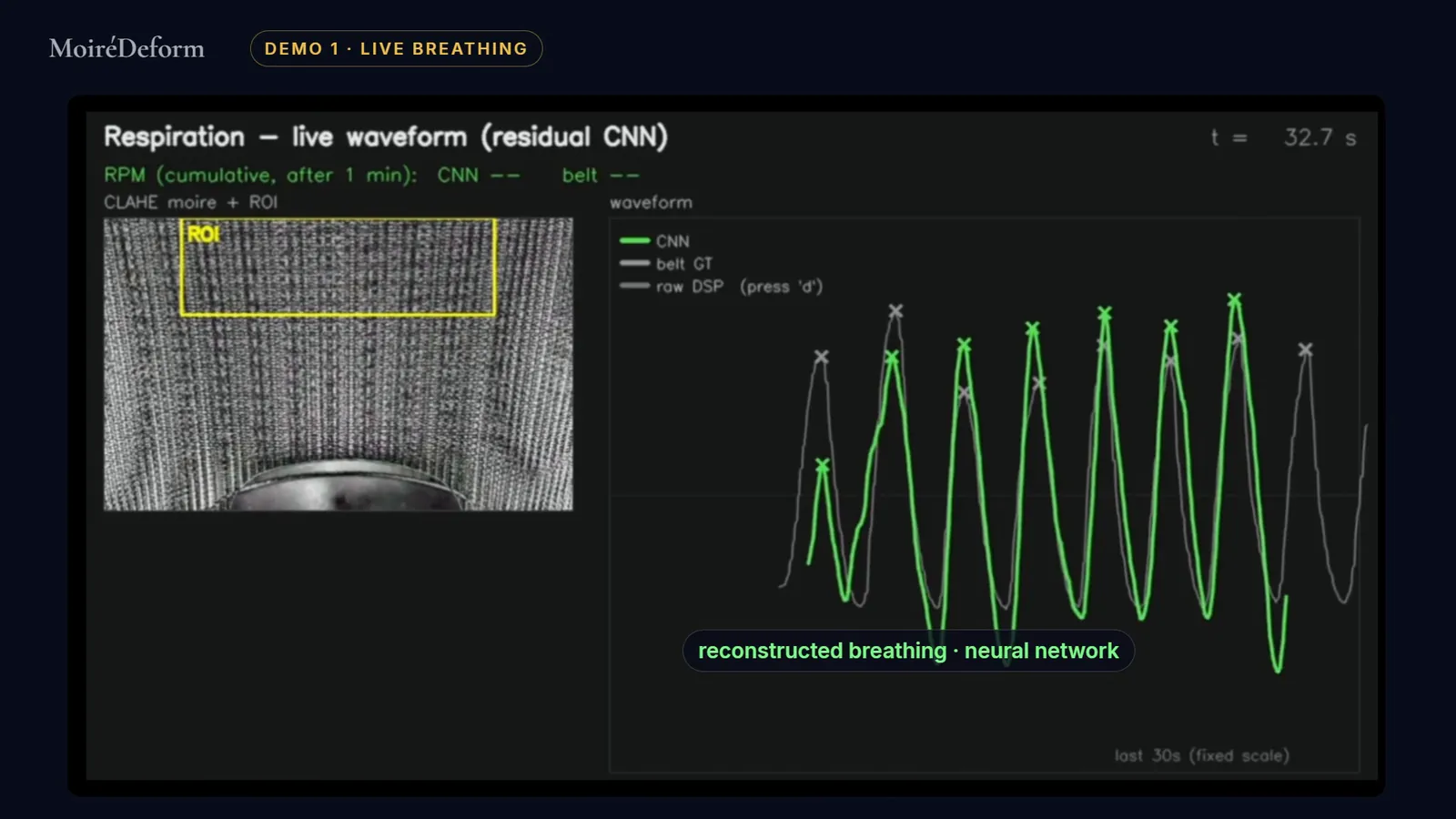
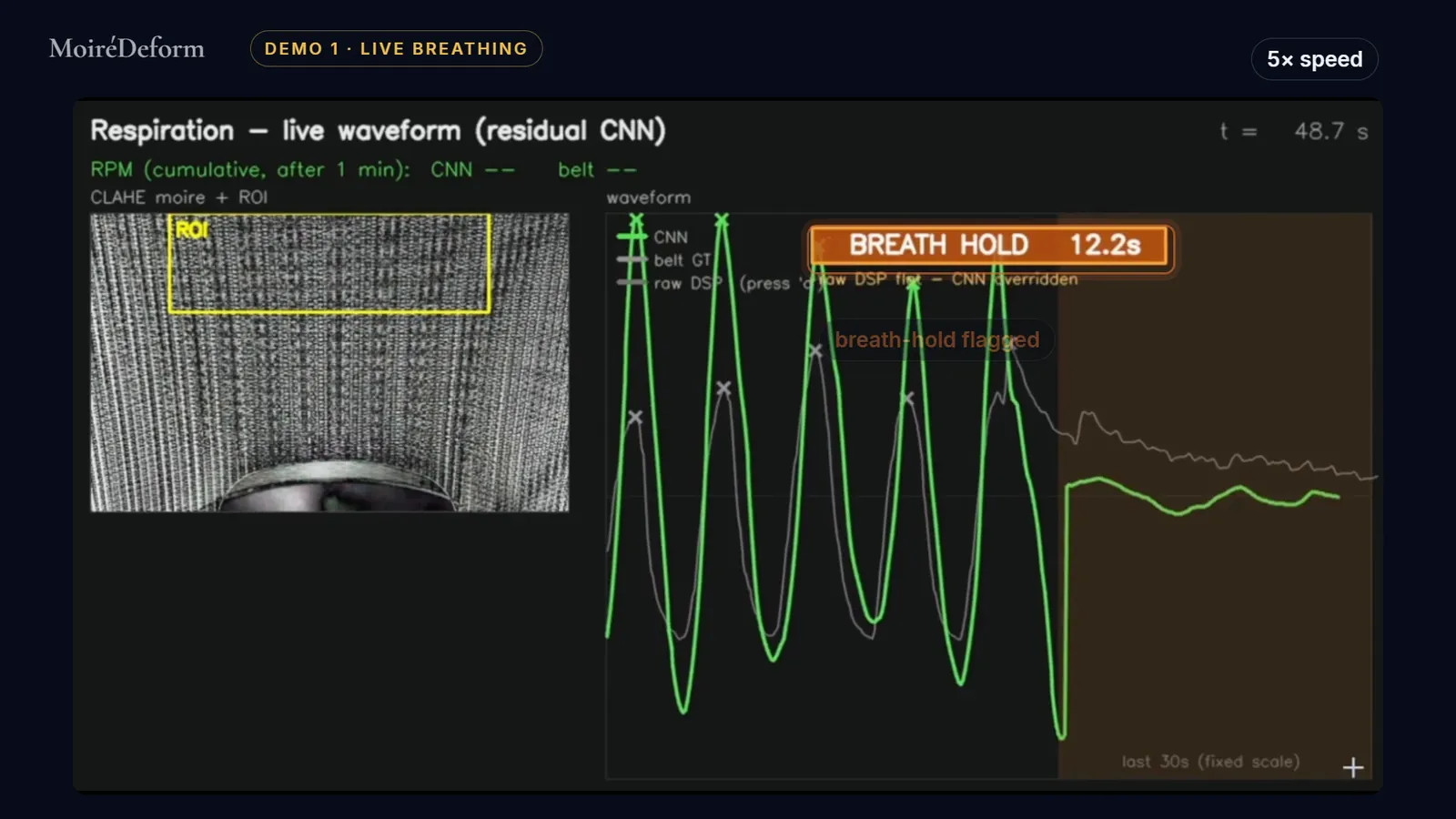
- Breathing. Each breath presses gently into the mesh. A lightweight neural network reconstructs the breathing waveform live from the moiré signal, and flags a breath hold within about 1.5 s.
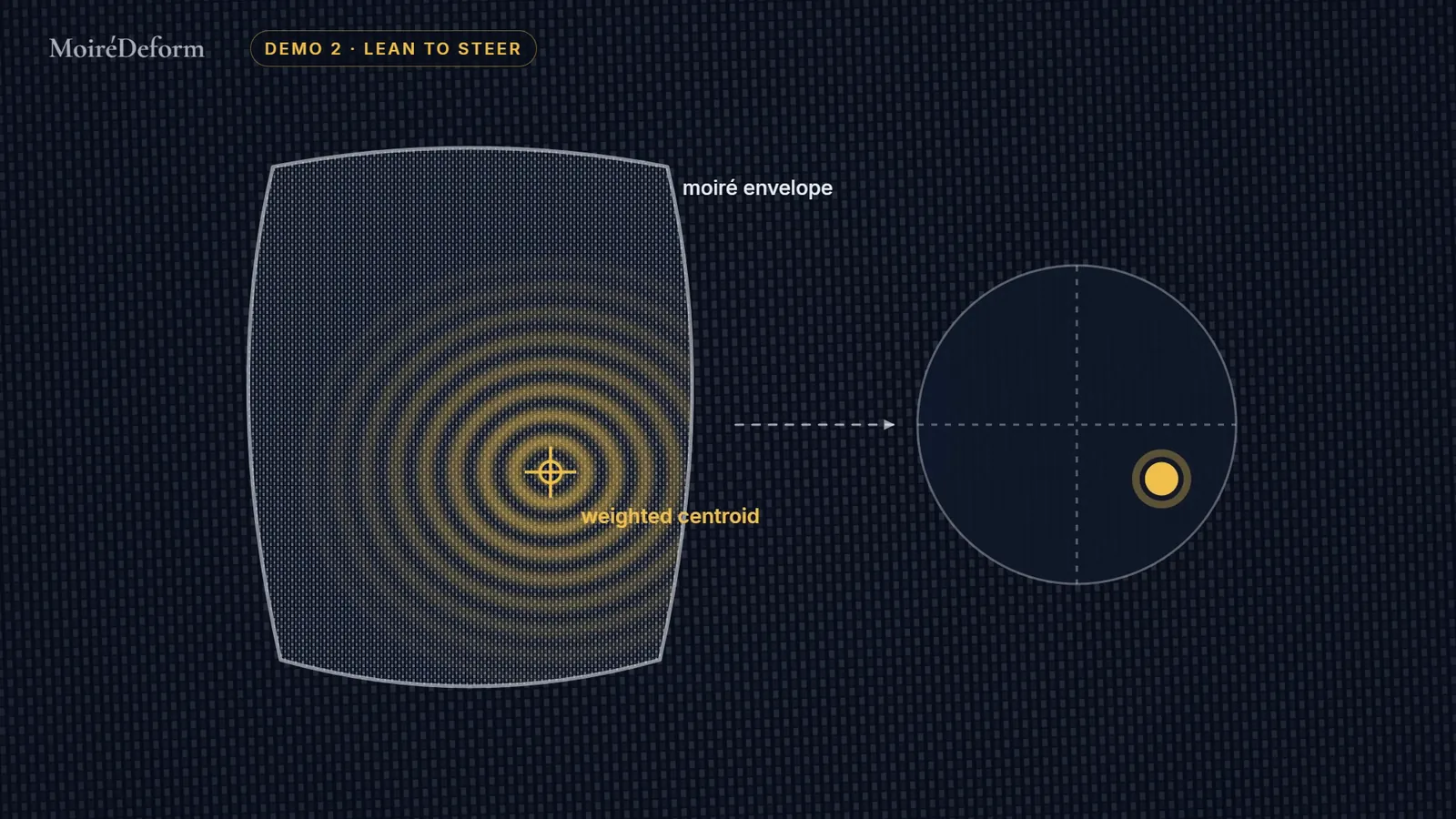
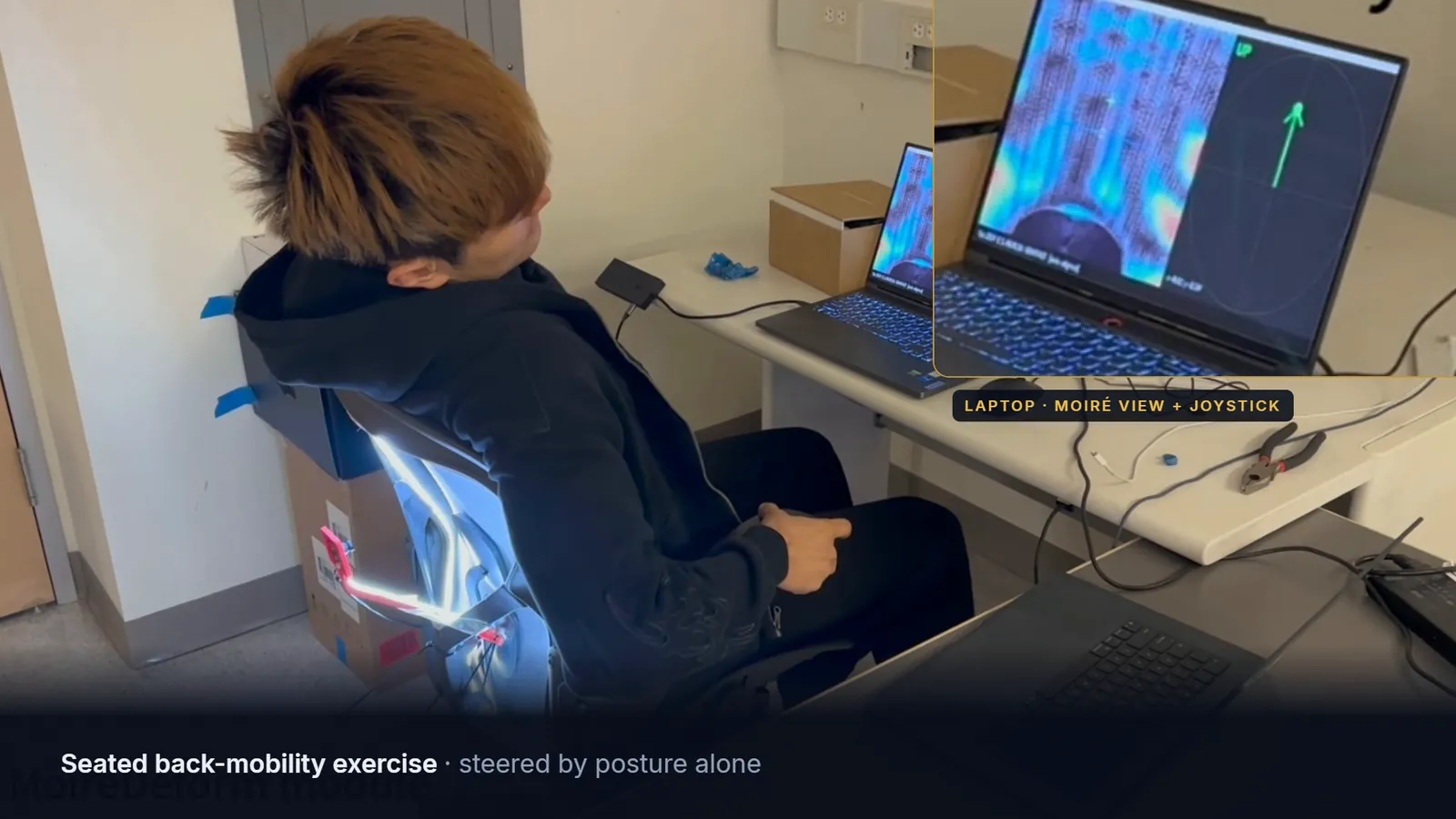
- Posture as input. Shifting your weight across the backrest moves the load on the mesh; the weighted centroid of the moiré envelope becomes a continuous two-dimensional joystick — here steering a seated back-mobility exercise.
results
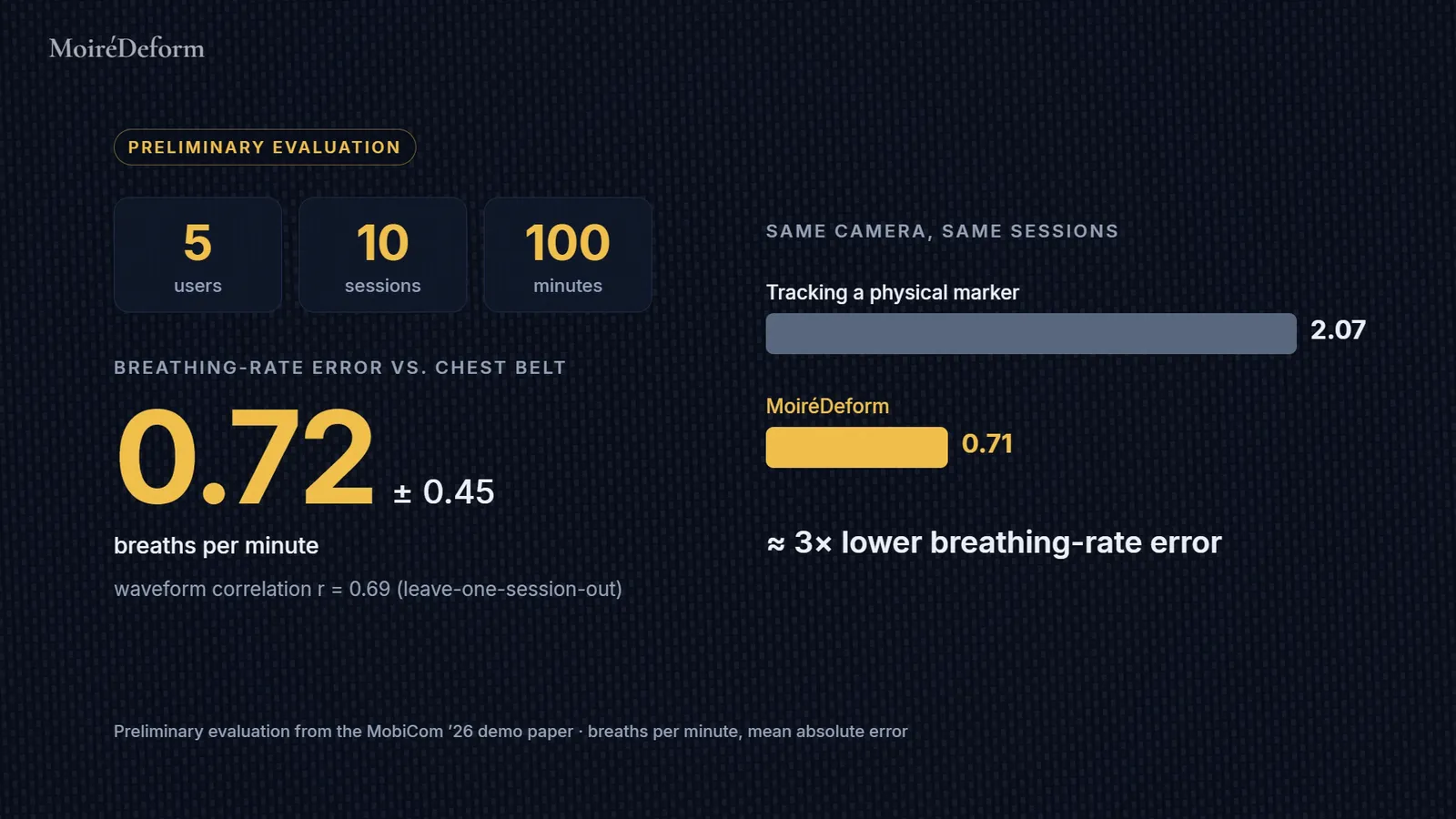
In a preliminary study with 5 users and 100 minutes of recordings, MoiréDeform tracked breathing rate within 0.72 ± 0.45 breaths/min of a chest belt. With the same camera, the moiré signal was about 3× more accurate than tracking a physical marker (0.71 vs. 2.07 breaths/min error). The same channel could support stretch-break coaching, posture awareness, hands-free input, or games you play by leaning — all by watching fabric, not faces.
my role
Co-first author. I developed the low-cost camera-based sensing approach that exploits naturally occurring woven textures as virtual moiré layers to amplify subtle surface deformation, enabling continuous body-lean interaction and respiratory waveform/rate sensing on an unmodified mesh chair — reducing respiratory-rate MAE from 2.07 to 0.71 breaths/min relative to physical-marker tracking.
video
figures