projects / respiraframe
RespiraFrame
On-Frame Respiratory Monitoring via Electrical Impedance Tomography and Bone-Conduction Acoustics
CHI 2027 · under review
Our breathing says a lot about our health. Coughs, sneezes and sniffs, and whether we breathe through the nose or the mouth, deeply or shallowly, all reflect the state of the respiratory system. Following these behaviors through the day could support self-monitoring and care — but chest belts and masks are obtrusive, and earbuds become uncomfortable and pick up the sounds around us.
RespiraFrame is an eyeglass frame that senses respiration through two complementary channels:
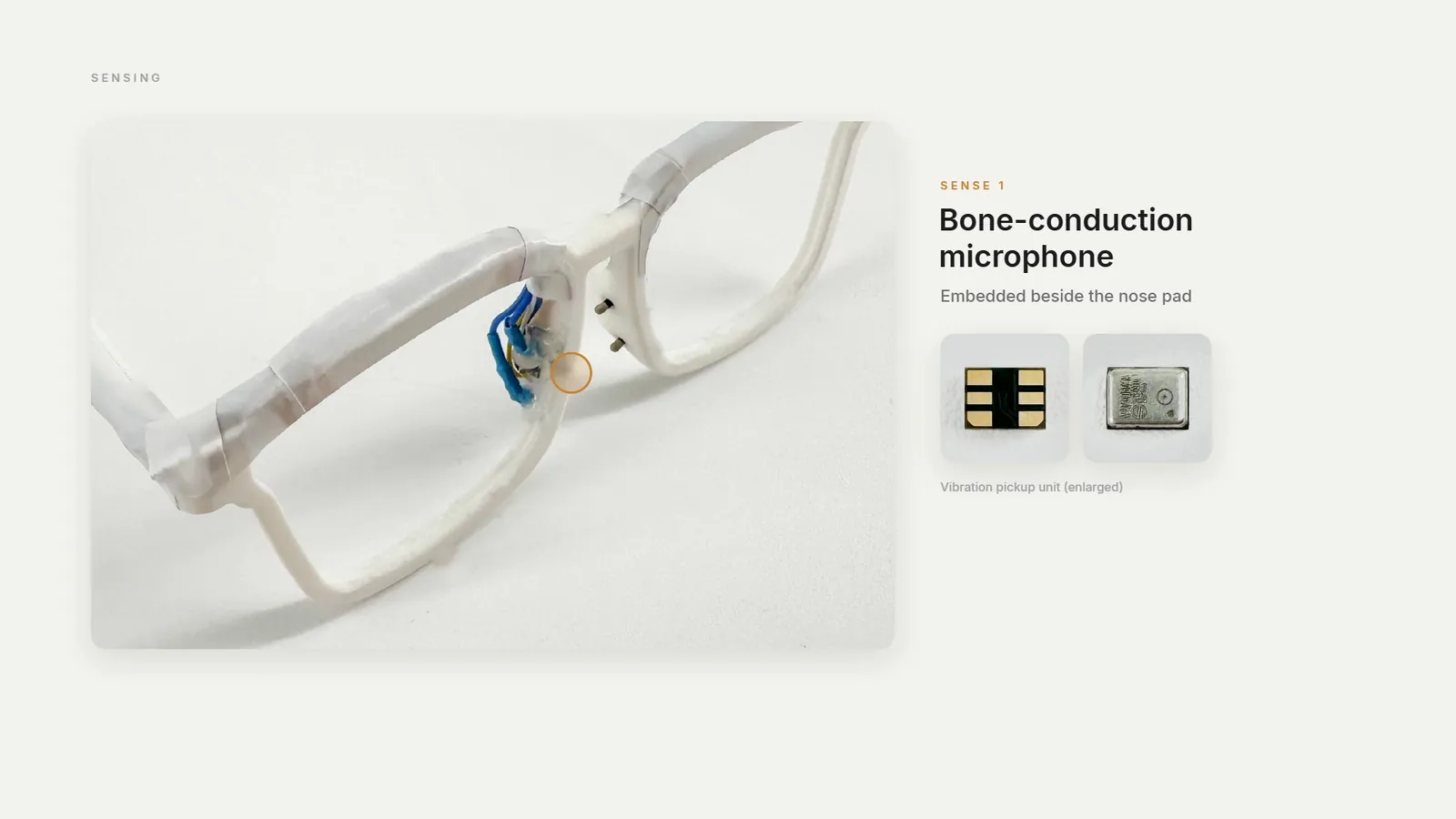
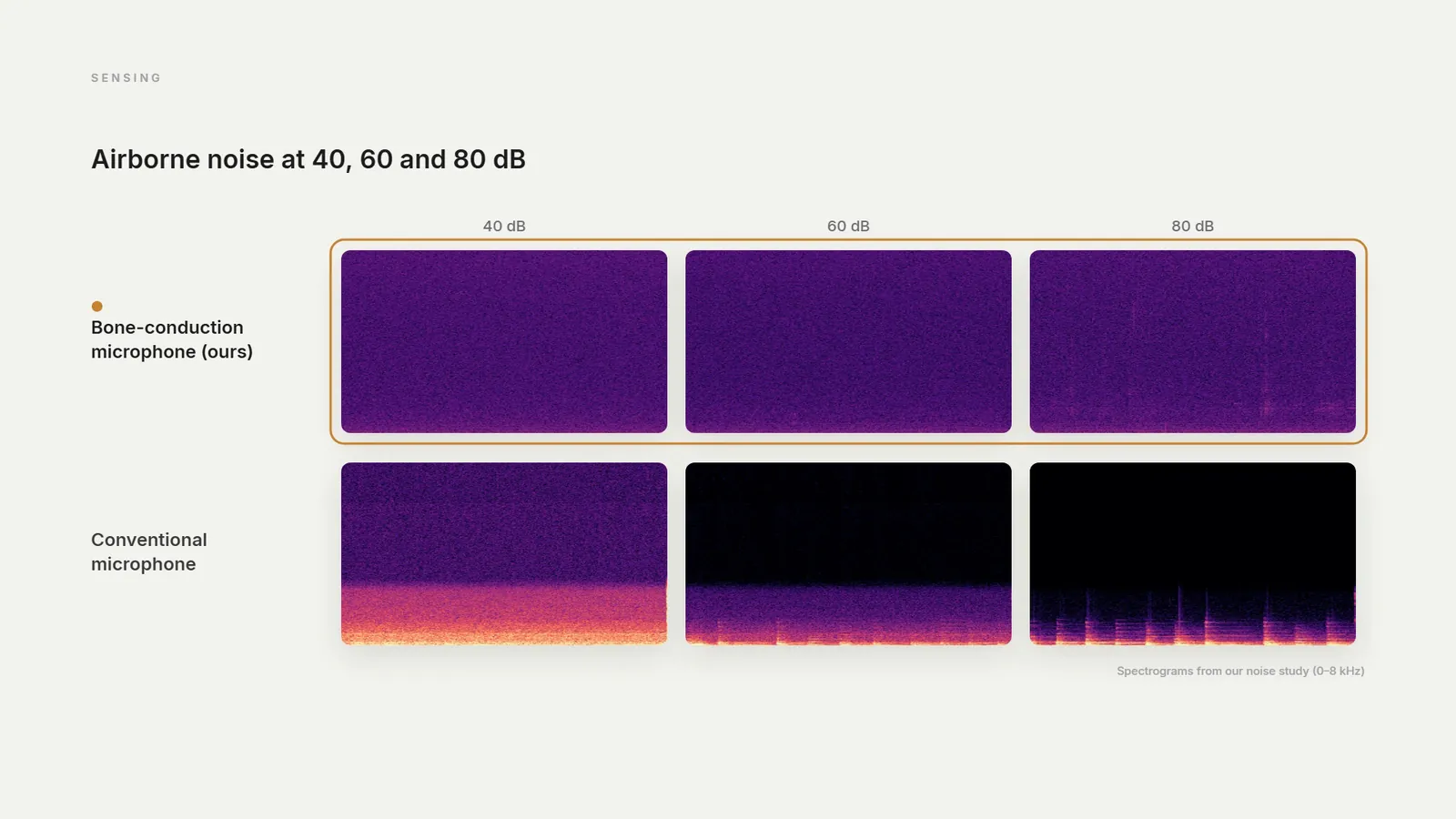
- Bone-conduction acoustics. A bone-conduction microphone embedded beside the nose captures breathing vibrations as they travel through the face. The sensor sits inside the frame, which shields it from airborne noise; its placement was chosen from four candidates as the one closest to the nasal airway.
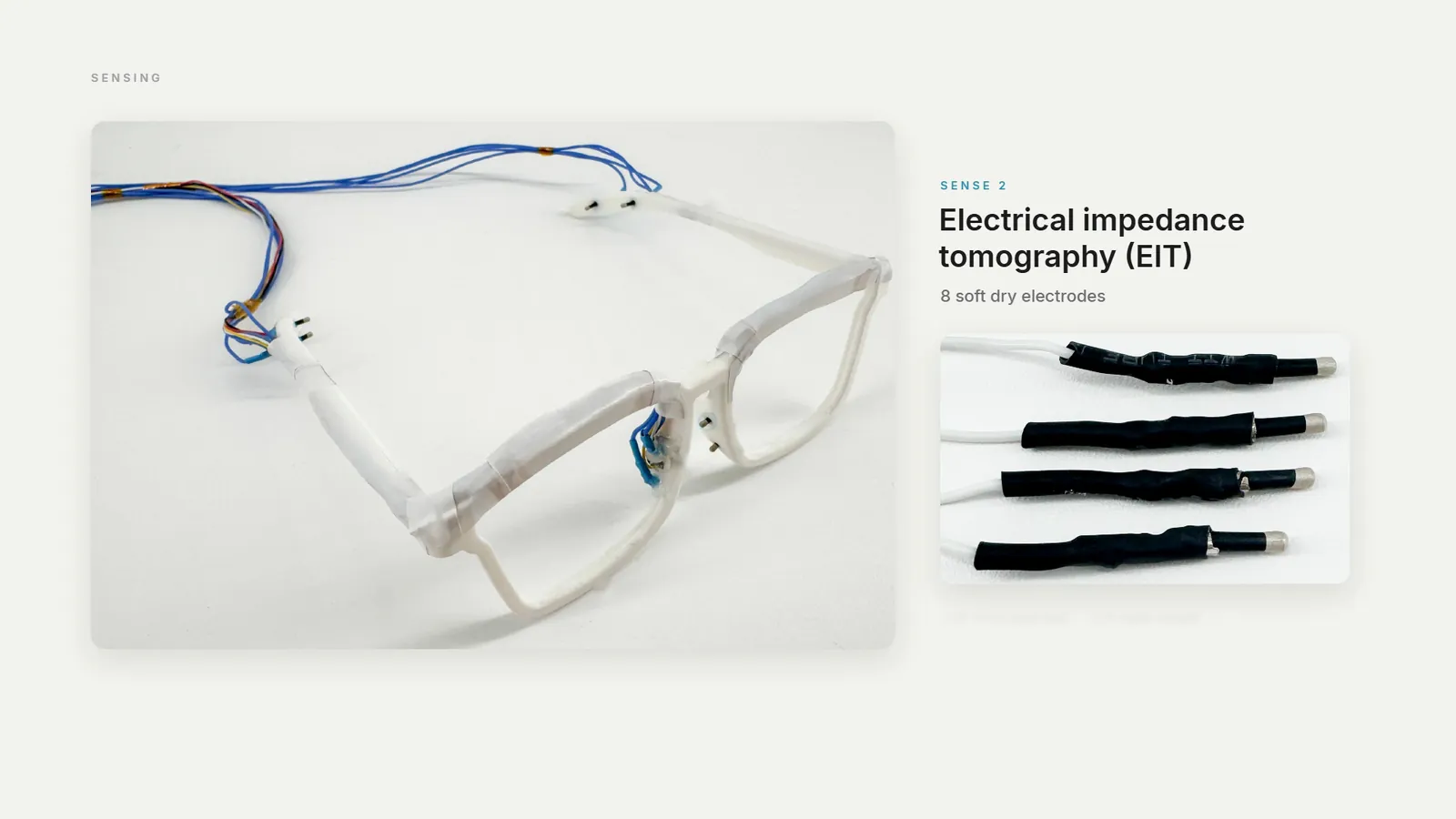
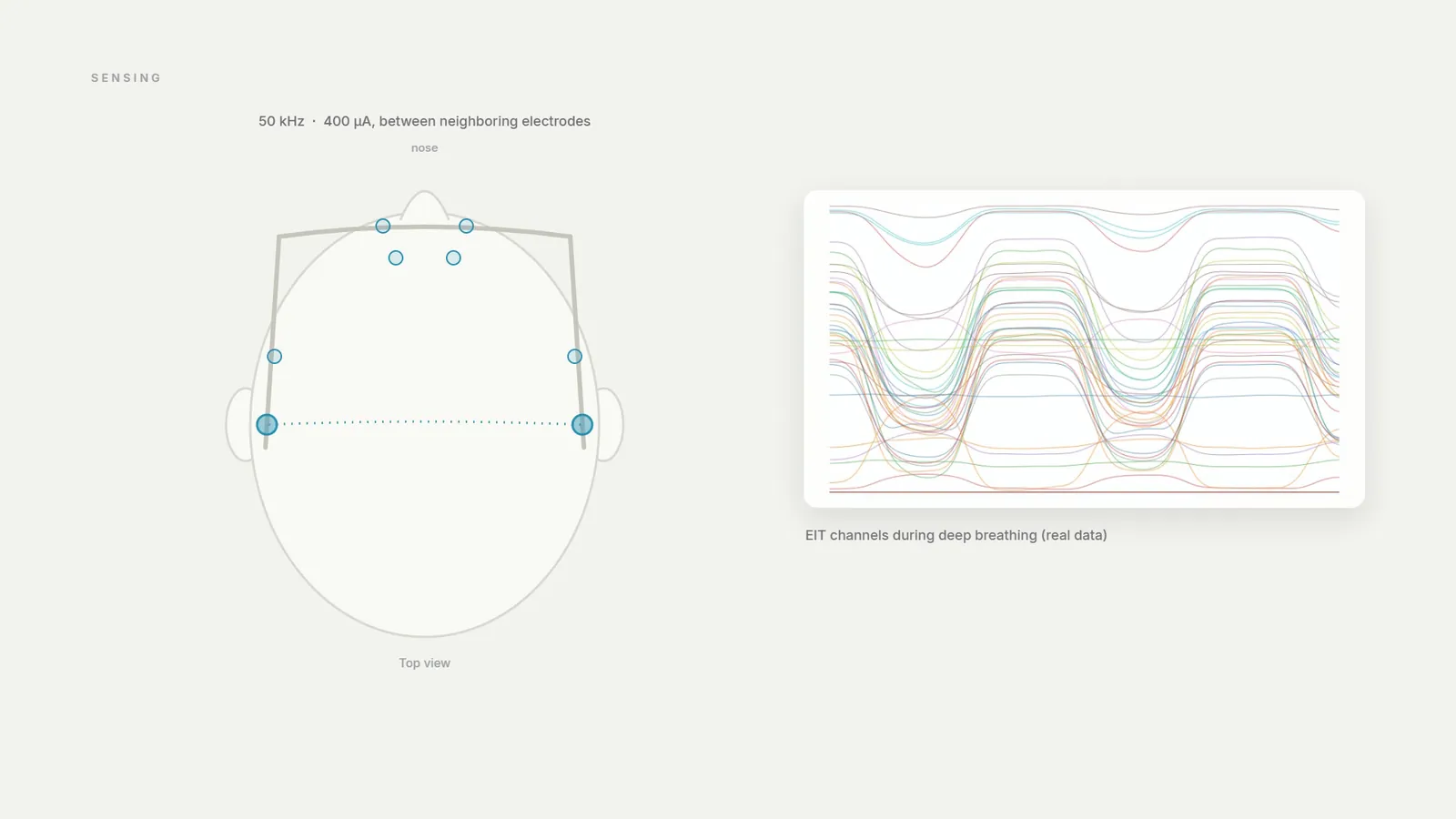
- Electrical impedance tomography (EIT). Eight soft dry electrodes sit where glasses already touch the skin — the nose pads and temples. A small, safe current injected between neighboring electrodes yields 64 measurements per cycle that follow how facial tissue changes as we breathe.
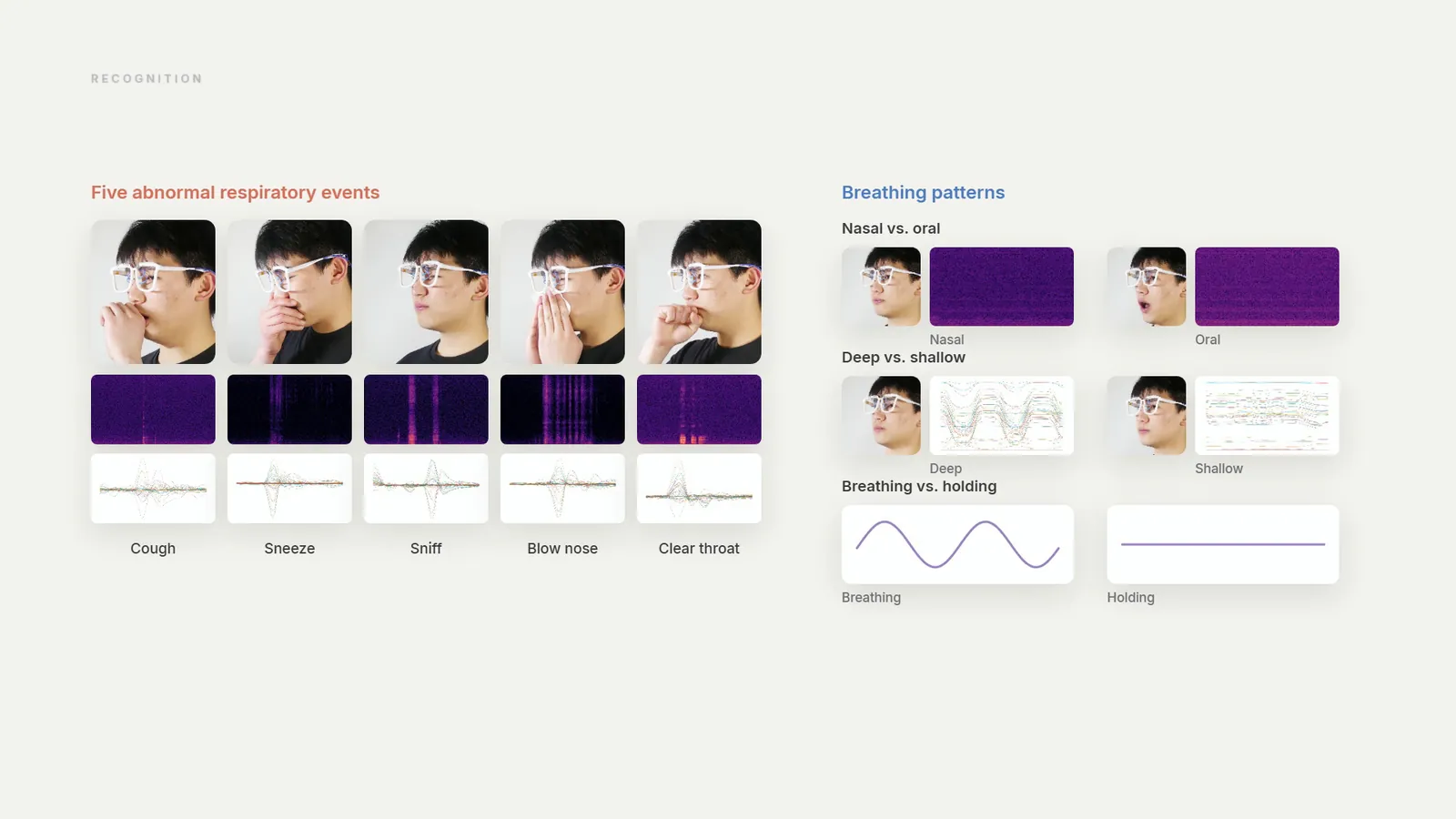
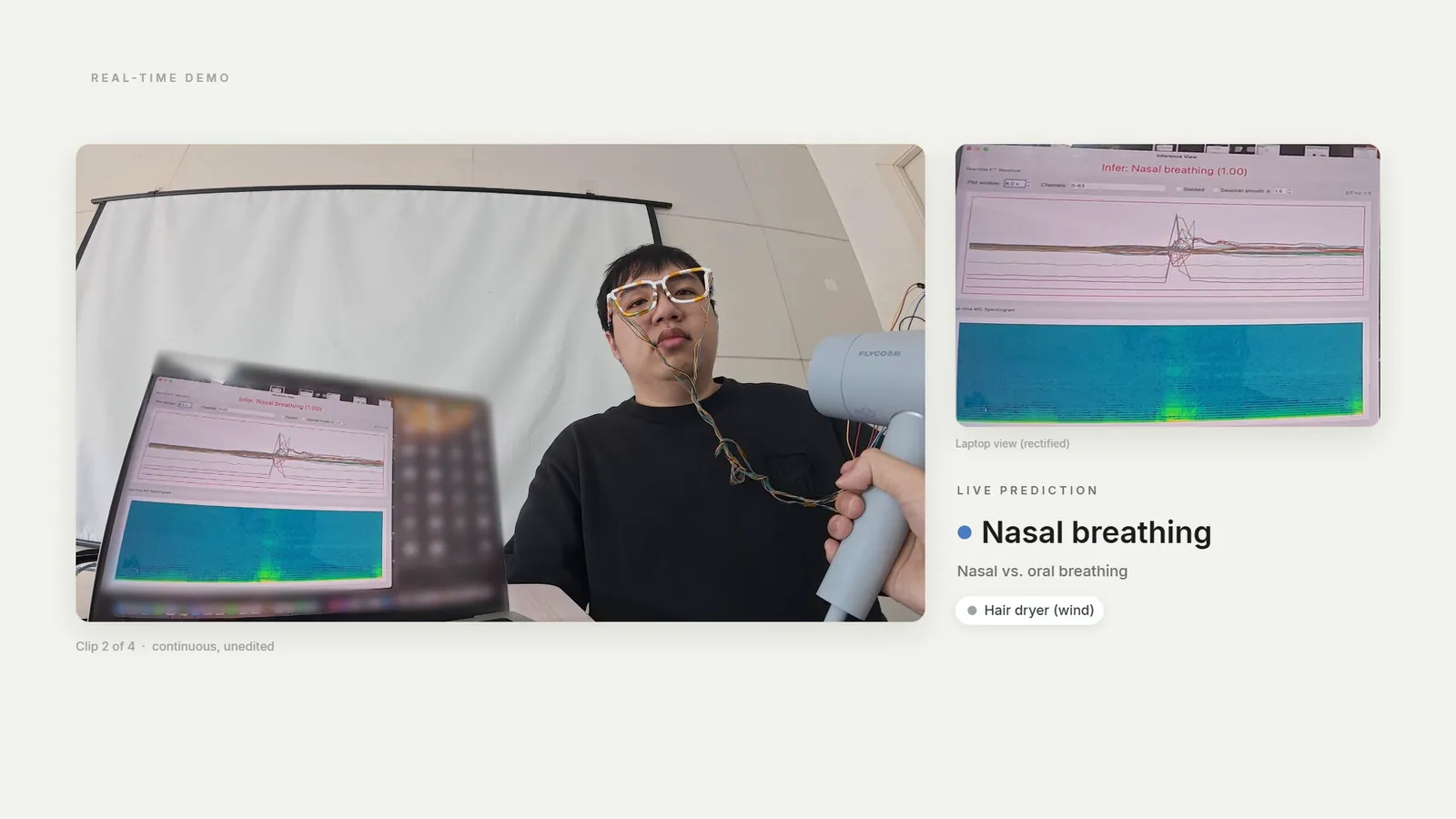
Every four seconds, both signals are encoded by a two-branch network whose features are fused with multi-head attention, recognizing five abnormal respiratory events (coughing, sneezing, sniffing, nose blowing, throat clearing) and distinguishing nasal vs. oral, deep vs. shallow breathing, and breathing vs. breath holding. It runs in real time.
results
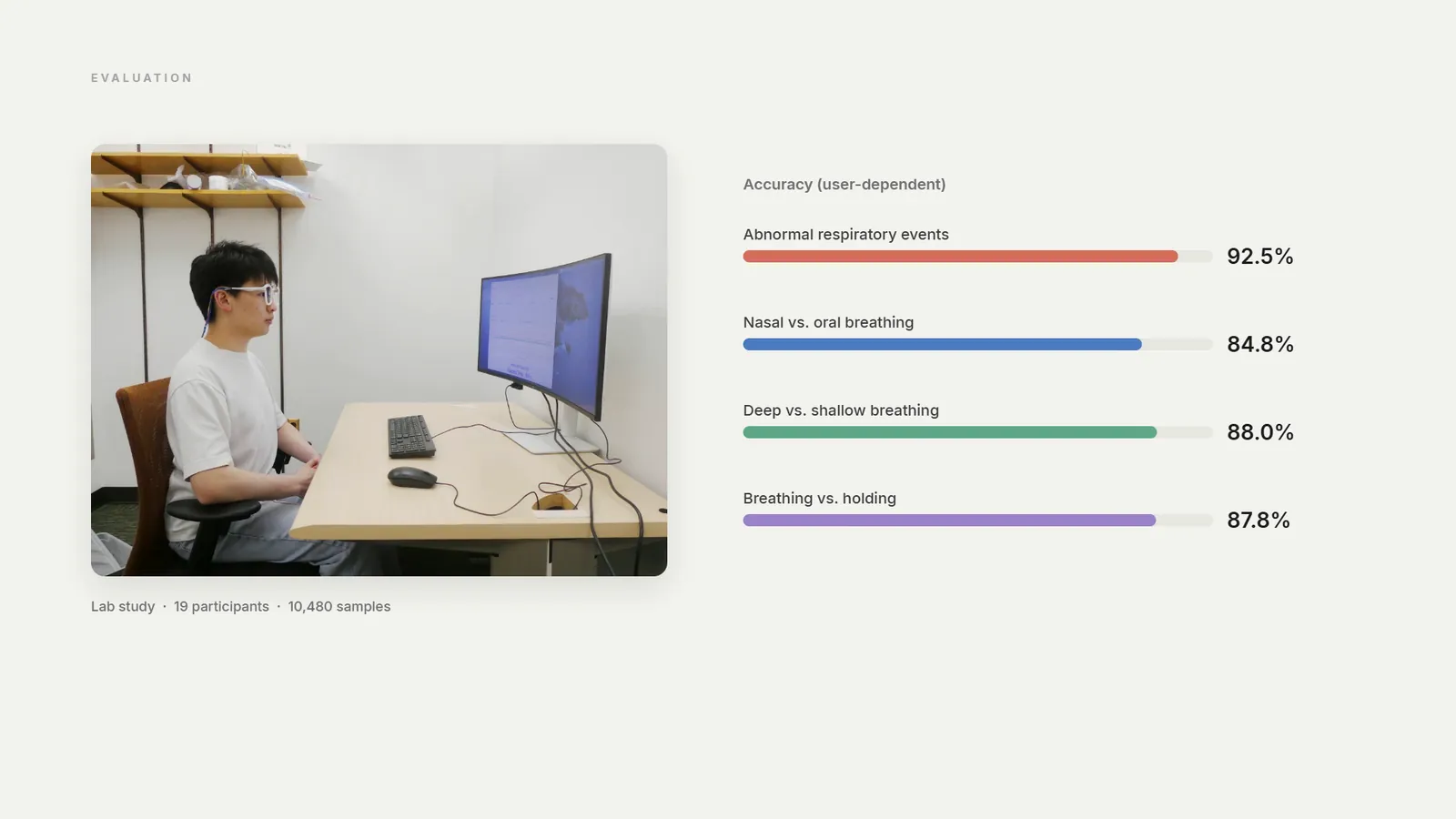
- Lab study, 19 participants: 92.5% accuracy for abnormal events; 84.8–88.0% for the three breathing tasks.
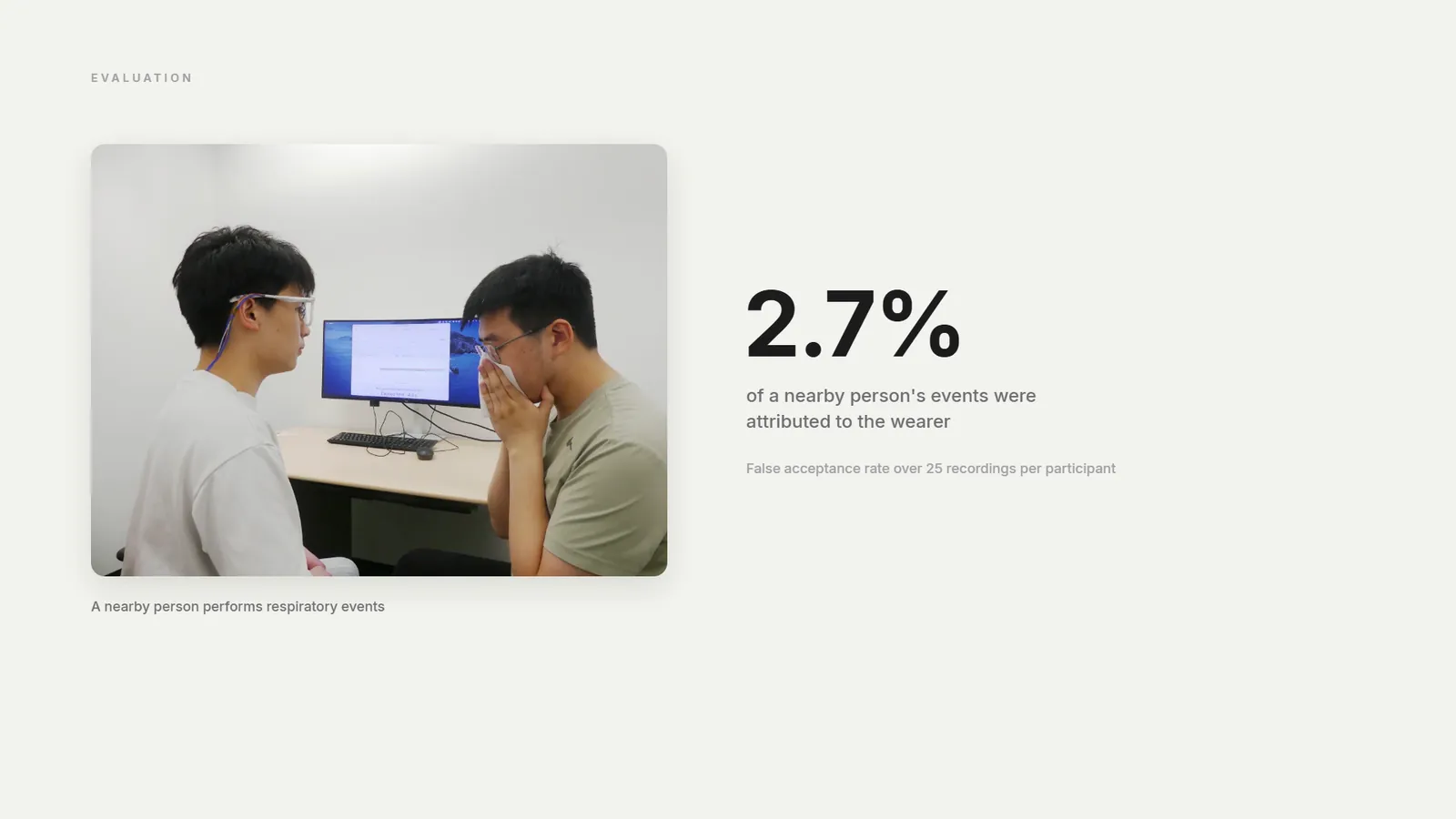
- Under background noise up to 80 dB, accuracy changed by less than 3 points; only 2.7% of a bystander’s coughs or sneezes were attributed to the wearer.
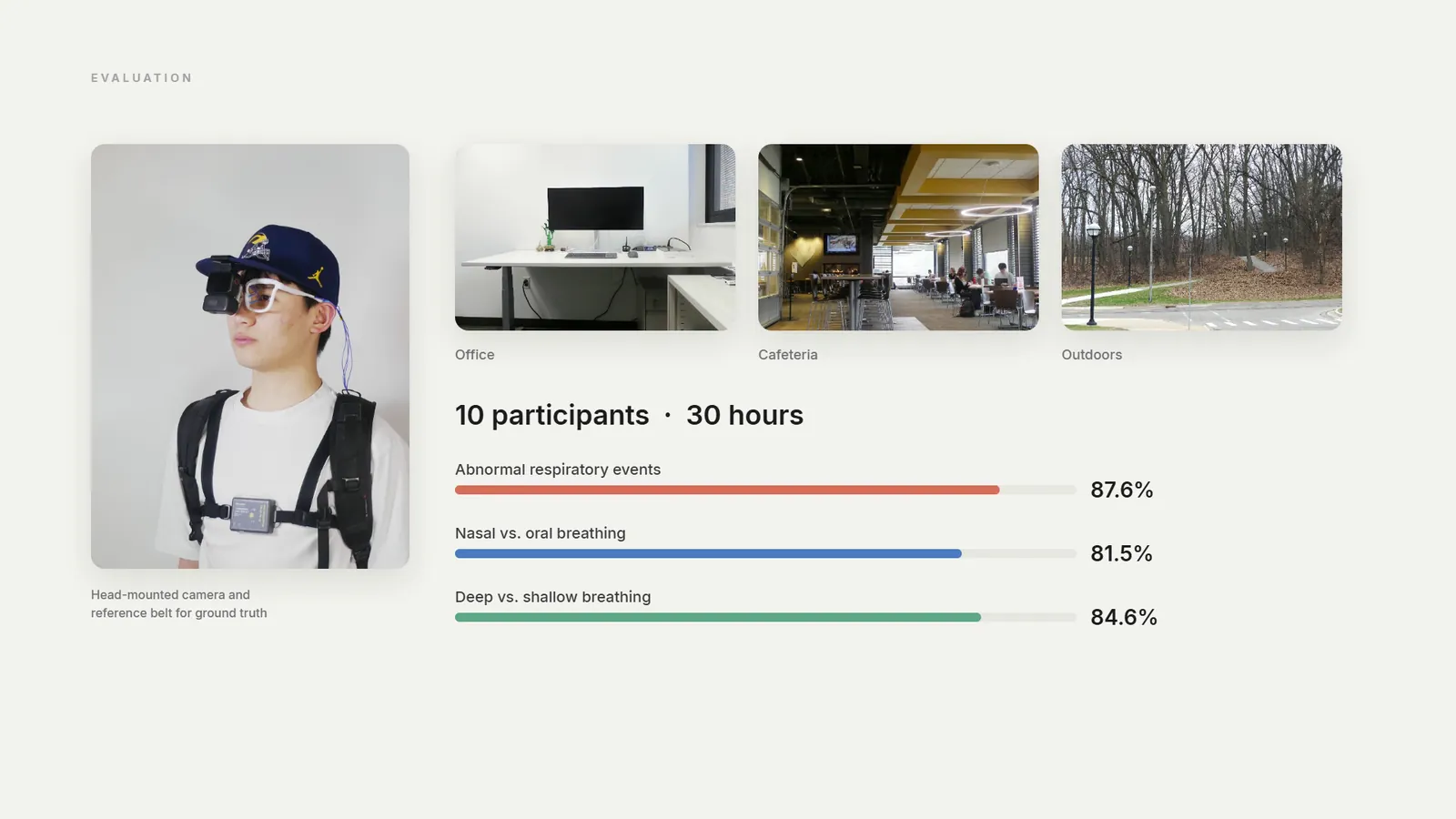
- In the wild — 10 participants, 30 hours in an office, a cafeteria, and outdoors: 87.6% for abnormal events, with no systematic decline over a four-week follow-up.
- Participants rated the glasses comfortable and socially acceptable — a more suitable everyday form factor than masks or earbuds.
my role
I contributed to the experimental design and evaluation, designing evaluation protocols spanning respiratory behaviors, motion and environmental interference, a three-day semi-wild study, and repeated wear over a four-week longitudinal study.
video
figures