In progress Human–AI interaction
SuperConductor
Towards Playful Human-AI Music Co-creation
Research assistant, Generative AI for Music and Audio, University of Michigan, with Prof. Herman Dong
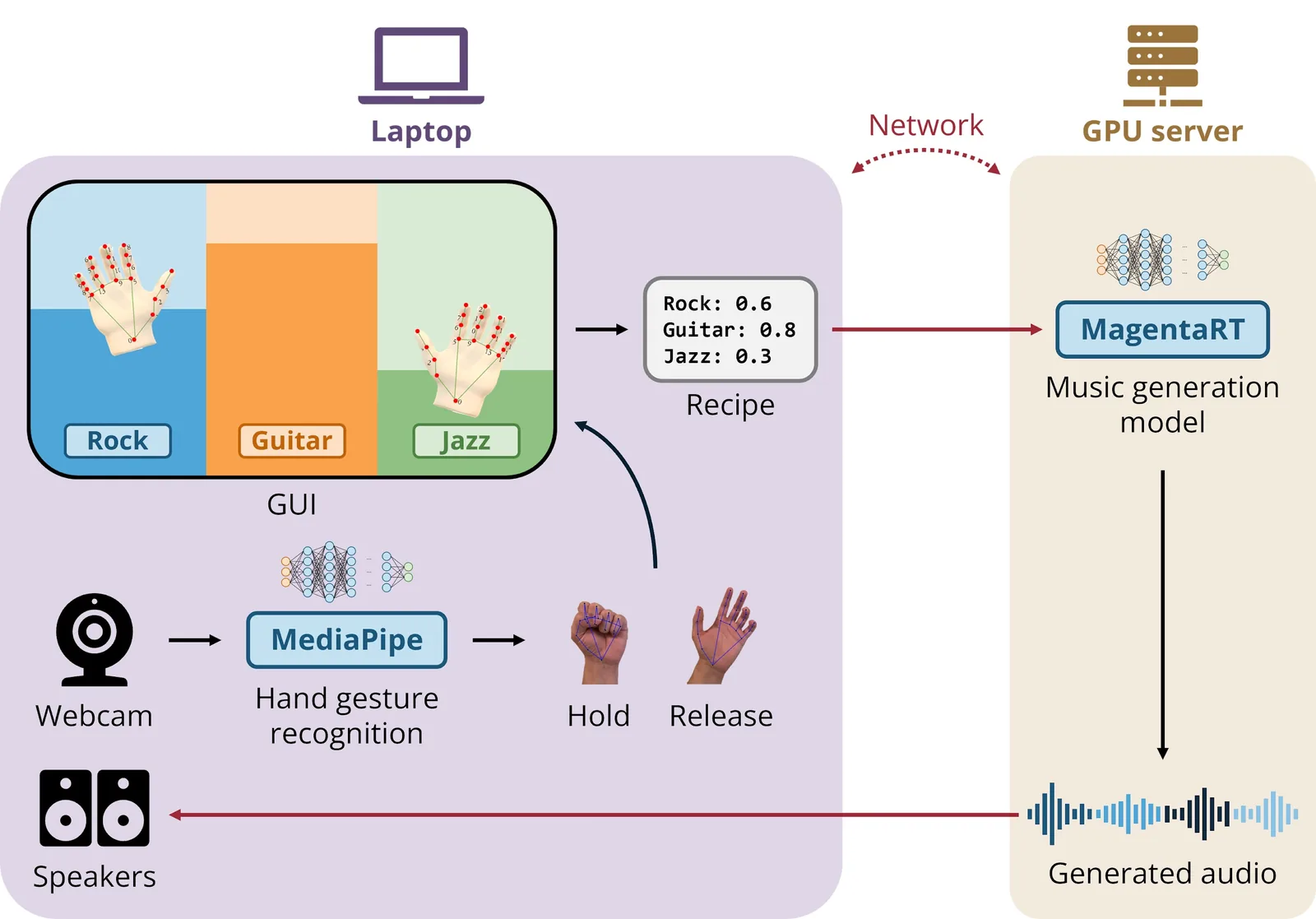
SuperConductor is Prof. Herman Dong’s project on playful human–AI music co-creation: an interactive system in which you steer an AI music generator with hand gestures and body movement, shaping its instrumentation, dynamics, tempo, density and tension as if conducting a group of AI players. The music comes from Magenta RealTime, generated on a GPU server and streamed back as it plays (Figure 4).
Tableau Vivant: a webcam study
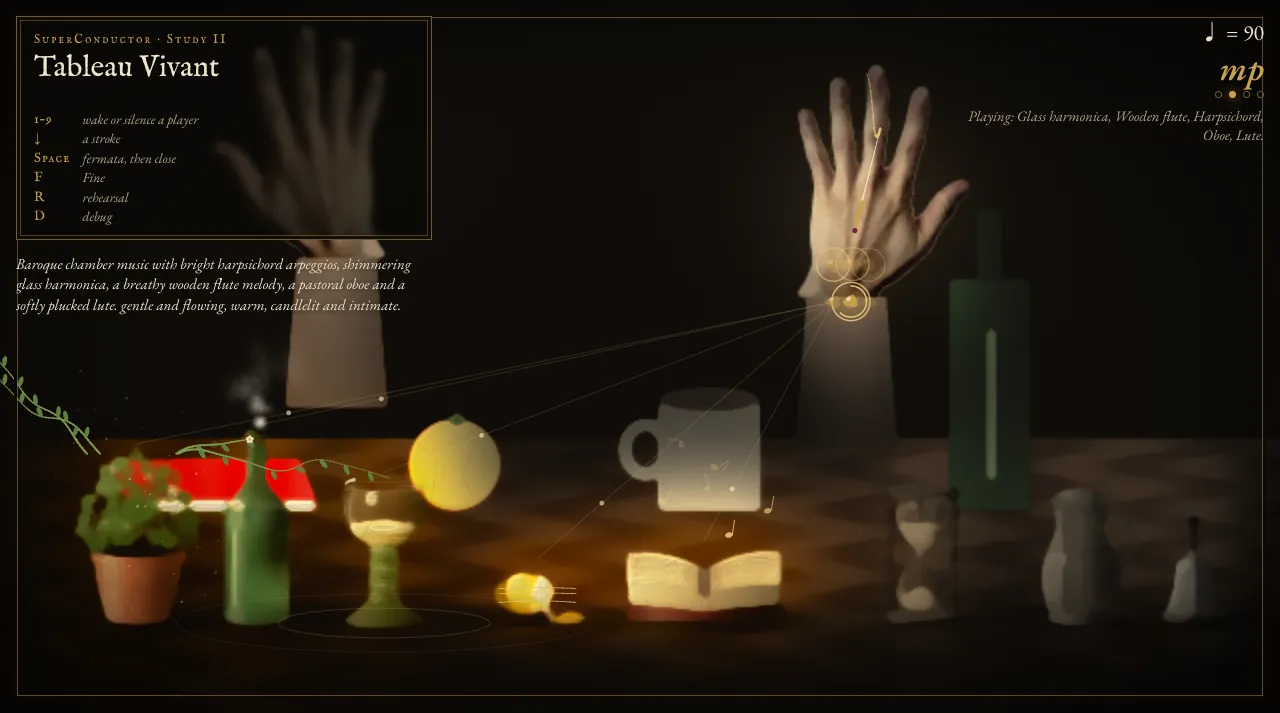
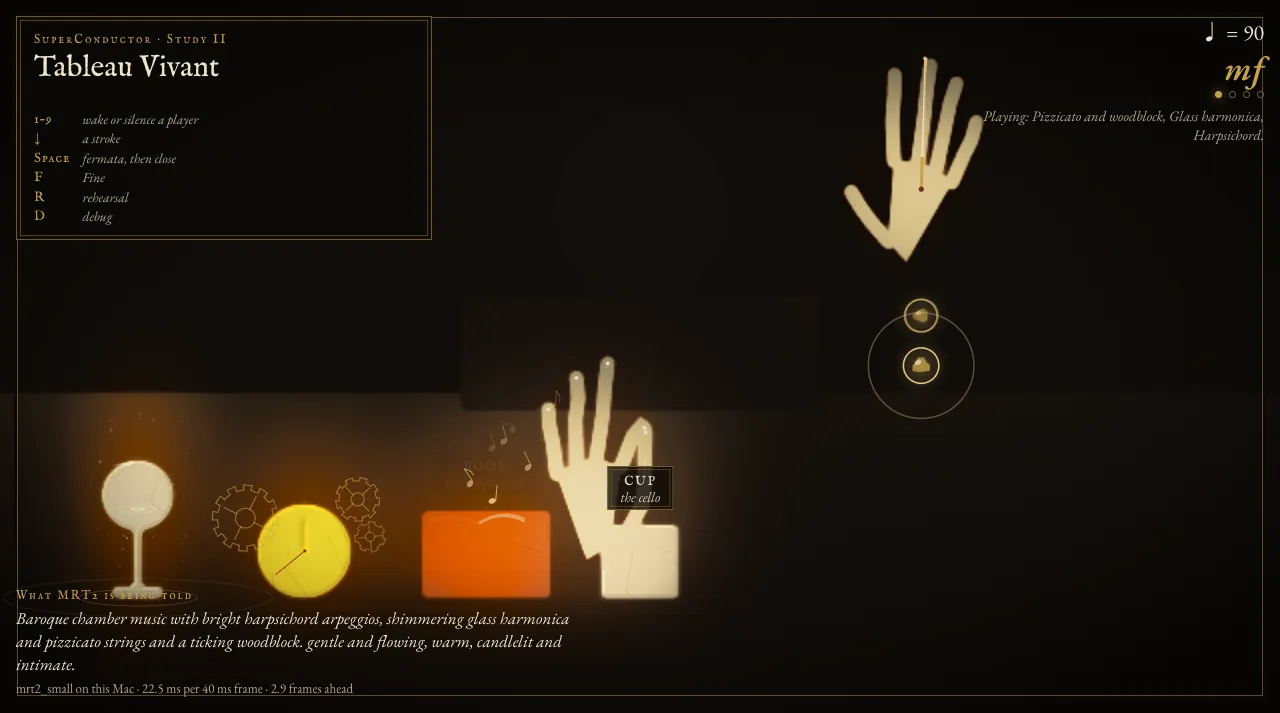
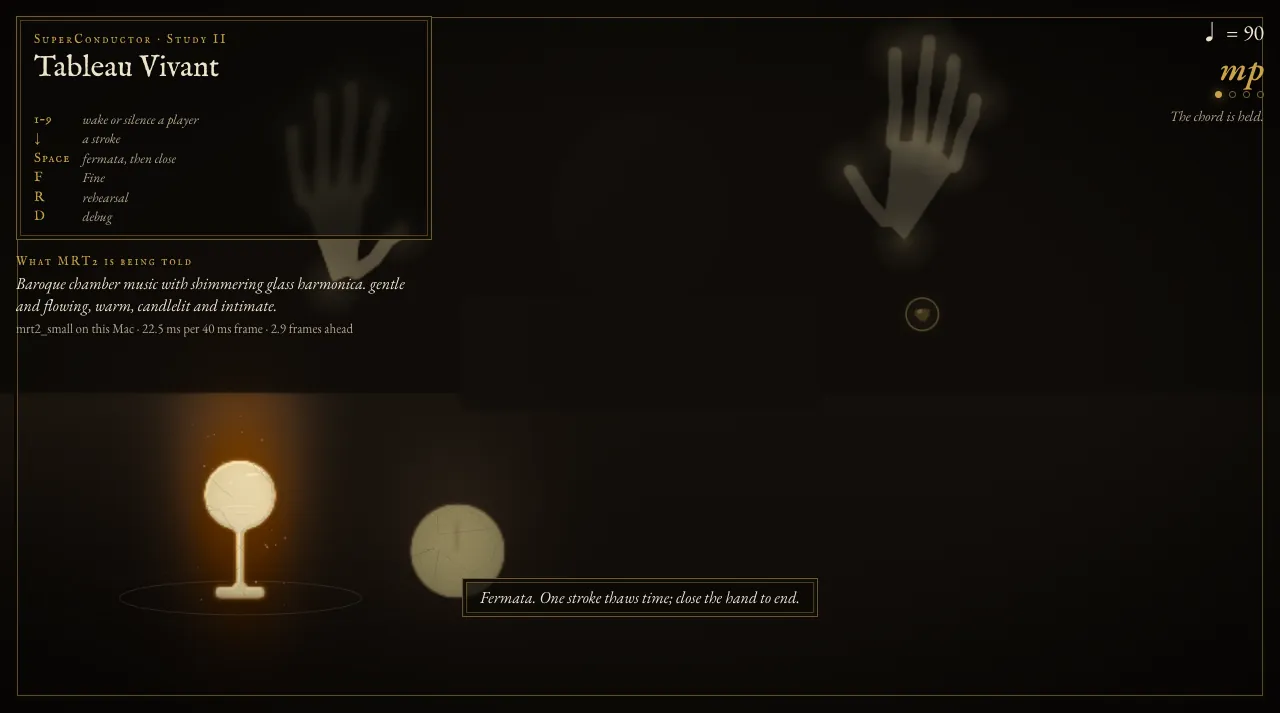
Small objects on the desk become players (Figures 1–3). The right hand conducts tempo, beat and dynamics; holding it high and still is a fermata, and a fist cuts the music off. The left hand draws a player out of an object with a pinch and a lift, and presses it silent with an open palm; a raised left fist builds tension, and opening the hand resolves it. The camera image is repainted as a candlelit still life in which only the players and the hands are lit.
Under the picture, the link to the music model works in audio time: a two-stroke count-in, and players that enter on the beats it announces, so the music lands where the hand says it should.
Next: the baton as the conductor’s instrument
MagicBaton already senses beats, tempo and accent gestures with two IMUs. Bringing it into SuperConductor changes the question from whether gestures can control the music to how much the AI should follow, and when it should improvise.
- Two time scales. Beat, tempo and dynamics act on the music at once. A new idea or a change of instrumentation is prepared ahead and enters at the next bar or phrase, so the change stays musical and the player knows when it will land.
- Keep or explore. A “keep” gesture holds on to a motif the player likes; an “explore” gesture asks for something new in the next phrase, with a way back to the kept idea. Both are defined as things you can hear, such as keeping the melodic contour, changing the rhythm or adding a voice, rather than a higher sampling temperature.
- A small first version. Tempo, dynamics, and keep or explore, with one or two voices. It asks whether players can steer the music on purpose, stay in control after the AI changes something, and feel more involved without more to carry.
Figures